namo brahmaṇya-devāya
"My Lord, You are the well-wisher of the Cows and the brahmanas, and You are the well-wisher of the entire human society and world." (Visnu Purana 1.19.65)
go-brāhmaṇa-hitāya ca
jagad-dhitāya kṛṣṇāya
govindāya namo namaḥ
We talk so much about cow protection, but what does cow protection actually mean? What does Go Raksha actually mean?
The True Meaning of Cow Protection
According to Srila Prabhupada's teachings, cow protection is not a passive activity. He explains:
"Cow protection means just like Bhagavan, Krishna, the Supreme Personality of Godhead. He is tending the cows. He is going, taking the cows personally from His royal palace going to the forest whole day, working there. Is it not, cowherd boy? And taken some little fruit, mother, whatever mother has given. They are playing that. So this is cow protection, not that 'Somebody will give money and we shall keep some third class cows and feed there and become cow protector.' That is not cow protection."
Srila Prabhupada continues:
"We must tend the cows very nicely so that they give us sufficient milk. And with that milk we shall live."
Śrīmad-Bhāgavatam Class 1.16.19
What Does It Mean to "Tend the Cows Very Nicely"?
First of all, we must learn what does a cow need to live a healthy life. This is not very difficult to know.
Essential Needs of Cows:
- Good Feed: Organic fresh green grass, according to season and some preventive medical care
- Proper Shelter: Protection from all harsh weather conditions — hot, cold or stormy
- Grooming and Cleanliness: Regular cleaning and maintenance of hygiene
- Grazing Facility: Space to graze and socialize with other cows
- Loving Care: Compassionate treatment and attention
The Reciprocal Relationship
Cows and bulls that are lovingly kept like this in a clean environment will stay healthy and will give us back their love a hundred folds, in the form of:
- All the 5 products of a cow (milk, butter, yoghurt, go ark, etc.)
- Transportation on a bullock cart
- Bull power in the agricultural sector
- Natural fertilizer through their dung
- Spiritual purification through their association
The Spiritual Significance
The scriptures describe Go Seva and Go Raksha as a highly reverential duty that can be done by a man to please Lord Krishna and bring auspiciousness and harmony in the society!
"Protection of Cows is the single most important principle towards saving the whole world from both moral and spiritual degradation. Simply by protection of cows all the wonderful benefits of religiosity and piety will be automatically achieved without any separate endeavour."
Krishna's Special Connection with Cows
As stated in the Srimad Bhagavatam:
"Lord Krsna, the Supreme Personality of Godhead, is the prime protector of brahminical culture and the Cows. Without knowing and respecting these pleasing personalities, one cannot realise the science of God, and without this knowledge, any welfare activities or humanitarian propaganda cannot be successful."
SB 4.21.38 purport
Divine Qualities of Cows
Cows naturally embody several divine qualities that we should aspire to develop:
1. Gentleness and Non-violence (Ahimsa)
Cows teach us compassion through their peaceful nature. They never harm anyone and represent the principle of non-violence.
2. Generosity
They give freely of their milk and other products, asking for nothing but grass and care in return. This teaches us the virtue of selfless giving.
3. Motherhood
The cow is revered as a universal mother, nourishing all beings through her gifts. She represents the nurturing aspect of the divine feminine.
4. Patience and Tolerance
Their calm demeanor teaches us the virtue of patience and tolerance in our spiritual journey.
Practical Implementation at Sri Mayapur Goshala
At our goshala, we implement these principles through:
Daily Care Routine
- Early morning prayers and kirtan with the cows
- Fresh, organic feed and clean water
- Regular health check-ups by qualified veterinarians
- Grooming and cleaning of the cows
- Supervised grazing in open fields
- Evening prayers and rest in comfortable shelters
Spiritual Activities
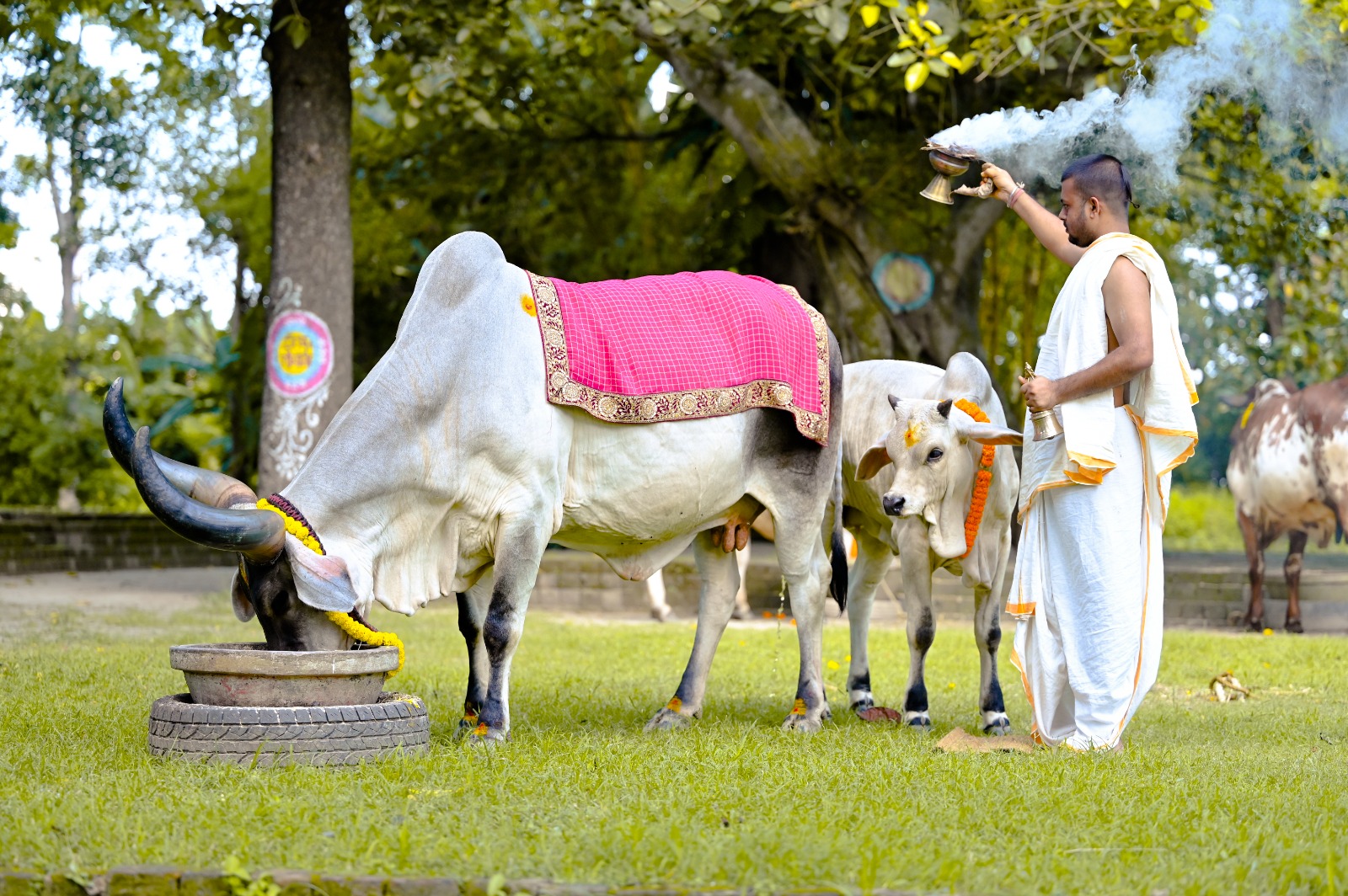
- Go-Puja ceremonies honoring the cows
- Kirtan and bhajan sessions in the cow sheds
- Offering of the first milk to the temple deities
- Teaching visitors about the spiritual significance of cows
The Broader Impact
Cows and bulls together provide all the required nutrients, ingredients, and services that the earth requires to produce food grains. This clearly indicates that mother cow and mother earth have a special relation - they need each other to flourish!
Environmental Benefits
- Natural fertilizer production
- Sustainable agriculture practices
- Soil health improvement
- Reduced dependence on chemical fertilizers
Social Benefits
- Rural employment opportunities
- Community building around shared values
- Preservation of traditional knowledge
- Cultural and spiritual education
How You Can Participate in Go-Seva
There are many ways to participate in cow protection:
Direct Service
- Volunteer at goshalas for hands-on cow care
- Sponsor a cow's daily care and maintenance
- Participate in Go-Puja ceremonies
- Help with feeding and grooming activities
Financial Support
- Monthly sponsorship programs
- One-time donations for specific needs
- Funding for medical care and facilities
- Supporting organic feed programs
Awareness and Education
- Share knowledge about cow protection
- Organize educational programs
- Support cow-friendly products
- Advocate for cow protection policies
Conclusion
True cow protection is not merely keeping cows alive, but ensuring they live with dignity, comfort, and love. It involves understanding their needs, providing proper care, and recognizing their spiritual significance in our lives.
As Srila Prabhupada taught us, cow protection is an active service that requires dedication, knowledge, and love. When we serve cows with the right consciousness, we not only benefit the cows but also purify ourselves and contribute to the welfare of the entire world.
At Sri Mayapur Goshala, we invite you to join us in this sacred service. Whether through direct participation, financial support, or spreading awareness, every contribution helps in maintaining this ancient tradition of cow protection for future generations.